Industrial Chiller Solutions
RFQ Based
OEM Backed
System Level Offerings
Representative OEM Options
Carrier
REPRESENTATIVE MODELS
Daikin
REPRESENTATIVE MODELS
Gree
REPRESENTATIVE MODELS
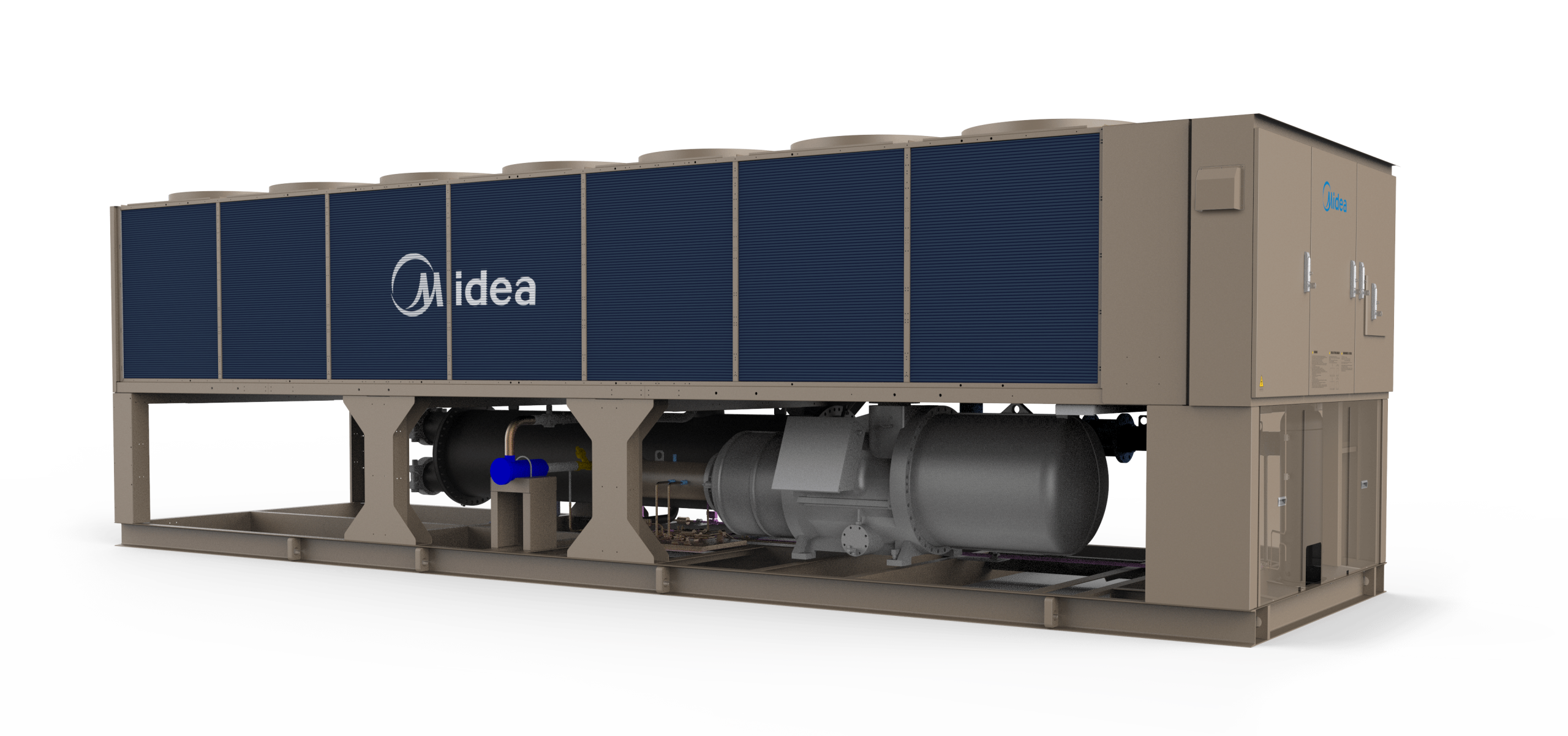
Midea
REPRESENTATIVE MODELS
- Midea Modular Chiller Series
- Midea Air-Cooled Chillers
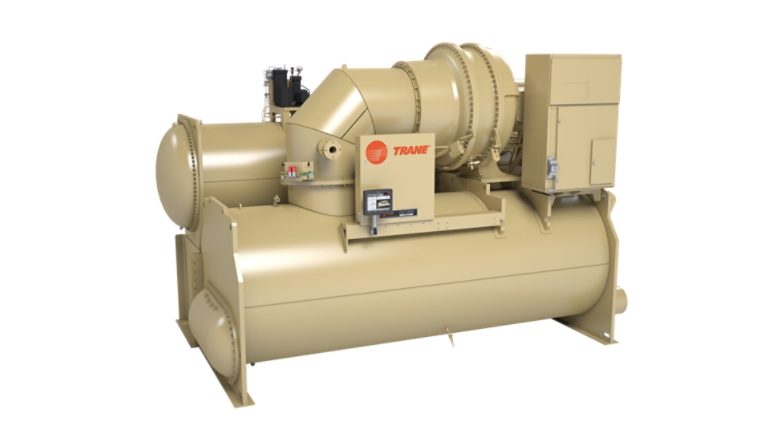
Trane
REPRESENTATIVE MODELS
- Trane CenTraVac Series
- Trane Sintesis Series
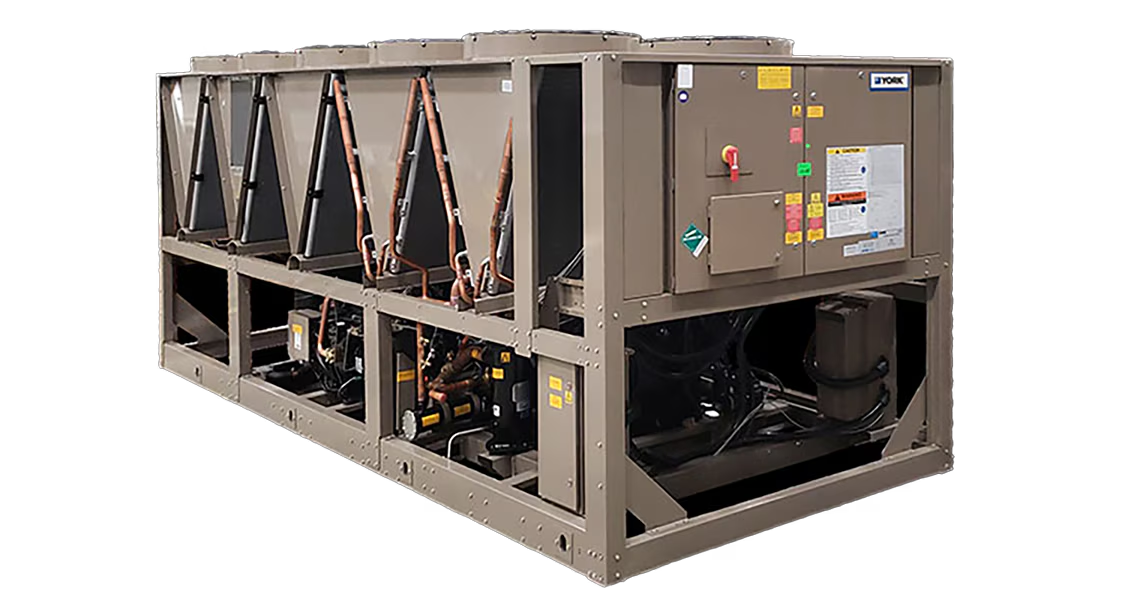
York
REPRESENTATIVE MODELS
- York YVAA Series
- York YK Series
Industrial Chillers
مركز المعرفة
How to Select the Right Industrial Chiller Capacity
Industrial chillers are used to remove heat from machinery, fluids, and production processes where stable temperature control is critical. Selecting the correct chiller capacity is one of the most important decisions in any cooling project. An undersized system can cause overheating and downtime, while an oversized system can waste energy and increase capital cost.
🔹 Why Correct Capacity Matters
The right chiller size helps to:
• Maintain process temperature consistency
• Protect machinery and equipment
• Reduce energy consumption
• Improve production reliability
• Lower long-term maintenance cost
🔹 Key Factors in Chiller Sizing
- Total Heat Load
This is the amount of heat that must be removed from the process. Sources may include:
• Machines and motors
• Hydraulic systems
• Production lines
• Product cooling demand
• Ambient heat gain
Capacity is commonly measured in:
• kW
• Tons of Refrigeration (TR)
- Required Outlet Temperature
Different applications require different cooling temperatures.
Examples:
• General machinery cooling → moderate temperatures
• Plastics processing → precise cooling control
• Food production → tighter thermal consistency
- Ambient Climate Conditions
In hot regions such as the UAE, outdoor temperature has major impact on air-cooled chillers. Equipment should be selected for high ambient duty, not mild European conditions.
- Operating Hours
• 8-hour shift use differs from 24/7 operations
• Continuous duty may justify premium equipment
- Future Expansion
If production may grow, sizing strategy should consider future load increase.
🔹 Common Buying Mistakes
• Choosing lowest price only
• Ignoring summer ambient temperature
• No future growth allowance
• Using estimated instead of calculated load
• Selecting brand before defining duty
🔹 Leading OEMs Commonly Considered
Premium segment:
• Trane
• Carrier
Strong mid-range:
• Daikin
• York
Value-oriented:
• Midea
• Gree
🔹 Practical UAE Insight
Many projects fail because chillers are selected from catalog rating instead of real summer operating conditions. Always verify performance at local ambient temperatures.
🔹 Final Thought Correct chiller sizing is not just about buying a machine — it is about protecting production, controlling energy cost, and ensuring long-term reliability.
Air-Cooled vs Water-Cooled Chillers: Key Differences
One of the most common industrial cooling decisions is whether to choose an air-cooled or water-cooled chiller. Both systems can perform well when selected correctly, but each has different installation, operating, and maintenance implications.
🔹 What Is an Air-Cooled Chiller?
An air-cooled chiller rejects heat directly to surrounding air through condenser coils and fans.
Best suited for:
• Factories with limited water supply
• Rooftop or outdoor installations
• Medium cooling loads
• Simpler projects requiring faster installation
🔹 What Is a Water-Cooled Chiller?
A water-cooled chiller rejects heat through a cooling tower and condenser water circuit.
Best suited for:
• Large industrial plants
• Continuous heavy-duty operations
• Facilities focused on highest efficiency
• Large centralized cooling systems
🔹 Key Comparison
Feature | Air-Cooled | Water-Cooled
Installation | Simpler | More complex
Water Requirement | None | Required
Efficiency | Good | Higher
Maintenance | Lower | Higher system complexity
Best Scale | Medium | Large
🔹 Lifecycle Cost Perspective
Air-cooled systems may cost less to install.
Water-cooled systems may save more energy over long-term large operations.
🔹 Common OEM Examples
Air and water cooled options available from:
• Trane
• Carrier
• Daikin
• York
Value segment options:
• Midea
• Gree
🔹 UAE Practical Insight
Where water cost, treatment, and maintenance resources are limited, air-cooled systems are often preferred. Large campuses and district-scale sites may justify water-cooled systems.
🔹 Final Thought
There is no universally better option. The right choice depends on project size, utilities availability, efficiency goals, and maintenance capability.
Chiller selection depends on cooling load, required outlet temperature, ambient climate, operating hours, water quality, installation space, and budget objectives. If you are unsure which solution fits your operation, our team can guide you before you make a decision.
- Guidance based on industrial process and cooling demand
- Recommendations for premium, mid-range, or value options
- Support in selecting air-cooled or water-cooled systems
- OEM-backed options aligned with project requirements
- No obligation to proceed
Trusted OEM & Brand Associations
We work with leading global manufacturers across our solution categories.